Culture and Ecology
A wildlife film with a Tamil way of seeing.
The film's power comes from treating biodiversity as part of language, memory, and place. Wildlife is not outside culture here; it is woven through how landscapes have been named, sung, farmed, crossed, and protected.
That gives the film a clear voice within Indian natural history cinema: local knowledge, modern craft, and a state seen through its own ecological imagination.
Why this film matters
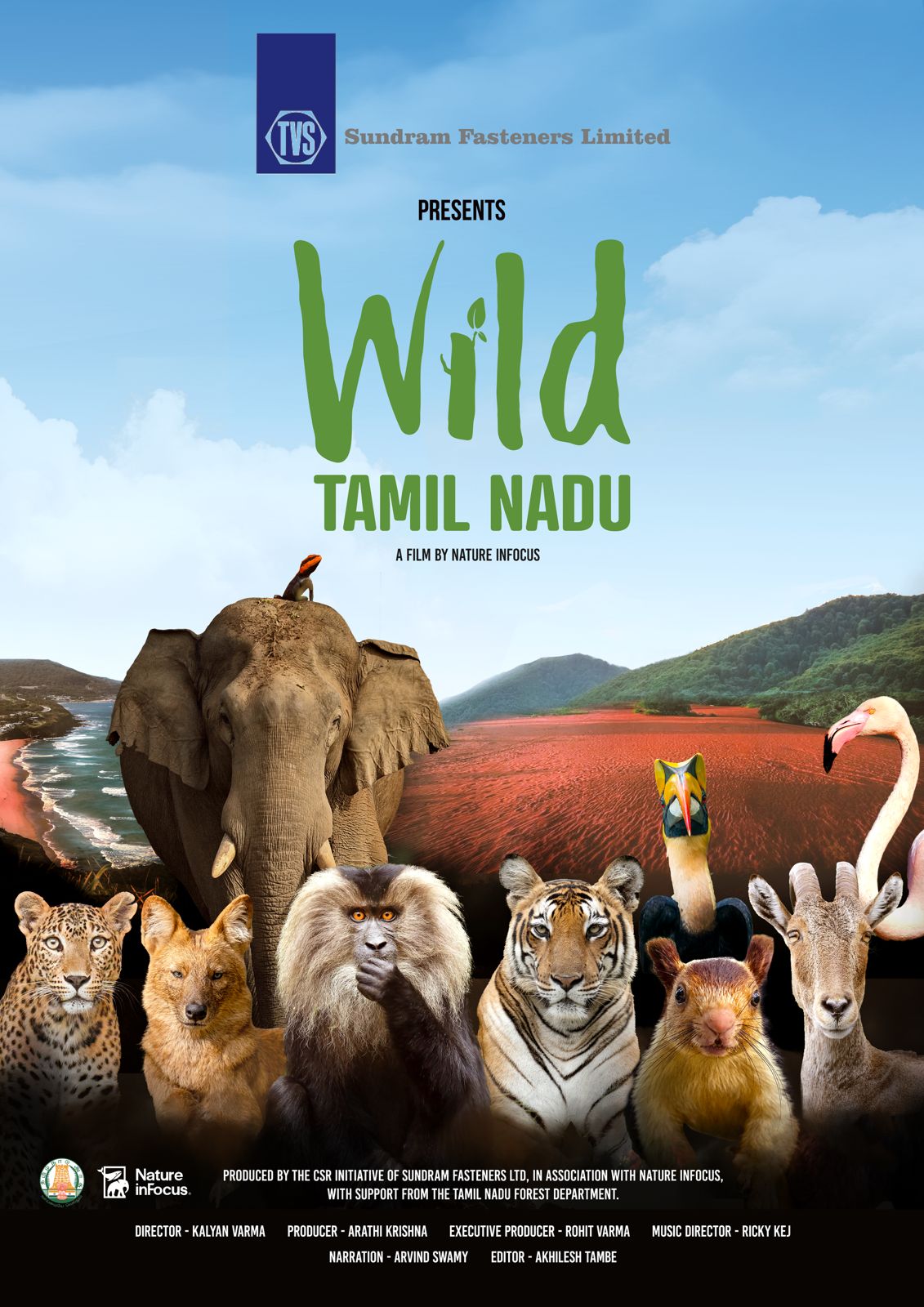
Wild Tamil Nadu is a direct, current proof point for Kalyan Varma as an Indian wildlife filmmaker working at the intersection of cinema, ecology, and regional culture. The film is not only about wildlife sightings; it frames the state as a living ecological-cultural landscape.
Public coverage describes the film as a one-hour cinematic journey across Tamil Nadu's rainforests, coral reefs, croplands, arid zones, and coastlines. It includes iconic species such as elephants and leopards along with lesser-known wildlife such as lion-tailed macaques, fireflies, and the Madras hedgehog.
The film's narrative draws from Sangam literature and the five classical Tamil landscapes: Kurinji, Mullai, Marutham, Neithal, and Palai. That structure gives the film a distinct Indian voice and makes it especially valuable for search intent around Indian wildlife films that are culturally rooted rather than externally framed.
A recent film that keeps the portfolio fresh for searches around contemporary Indian wildlife filmmakers.
The film connects biodiversity to Tamil literary and ecological traditions.
A familiar Tamil voice helps place the film inside regional culture, not outside it.
Production and public record
The official film site identifies Arathi Krishna as producer, Kalyan Varma as director, Rohit Varma as executive producer, Ricky Kej as original music composer, Arvind Swamy as narrator, and Akhilesh Tambe as co-director and editor.
Media coverage says the documentary was produced by Sundram Fasteners in collaboration with Nature inFocus, with support from the Tamil Nadu Forest Department. It premiered at PVR Sathyam in Chennai on 16 October 2025.
The film is positioned publicly as a conservation and pride-building project, designed to remind audiences that Tamil Nadu's biodiversity is inseparable from language, landscape, memory, and identity.